Cracked plaster on lath
Old plaster screwed back to its lath before the crack is bridged and filled.
Plaster crack workWalls and ceilings, South Shore of Long Island
Cracked plaster, ceilings ringed by ice-dam meltwater, walls soaked in a storm and the gaps a renovation leaves, rebuilt in layers and textured so the repair settles into the room.
One call gets your wall described to a contractor nearby, and you hold the quote in hand ahead of the work.
Call 7 days, 7am–9pm
Old plaster screwed back to its lath before the crack is bridged and filled.
Plaster crack workTea-brown rings and soft patches where melting snow found a way in.
Ice-dam damage overheadSoaked gypsum cut away to clear the high-water mark, dried out, then rebuilt.
Flood and leak repairs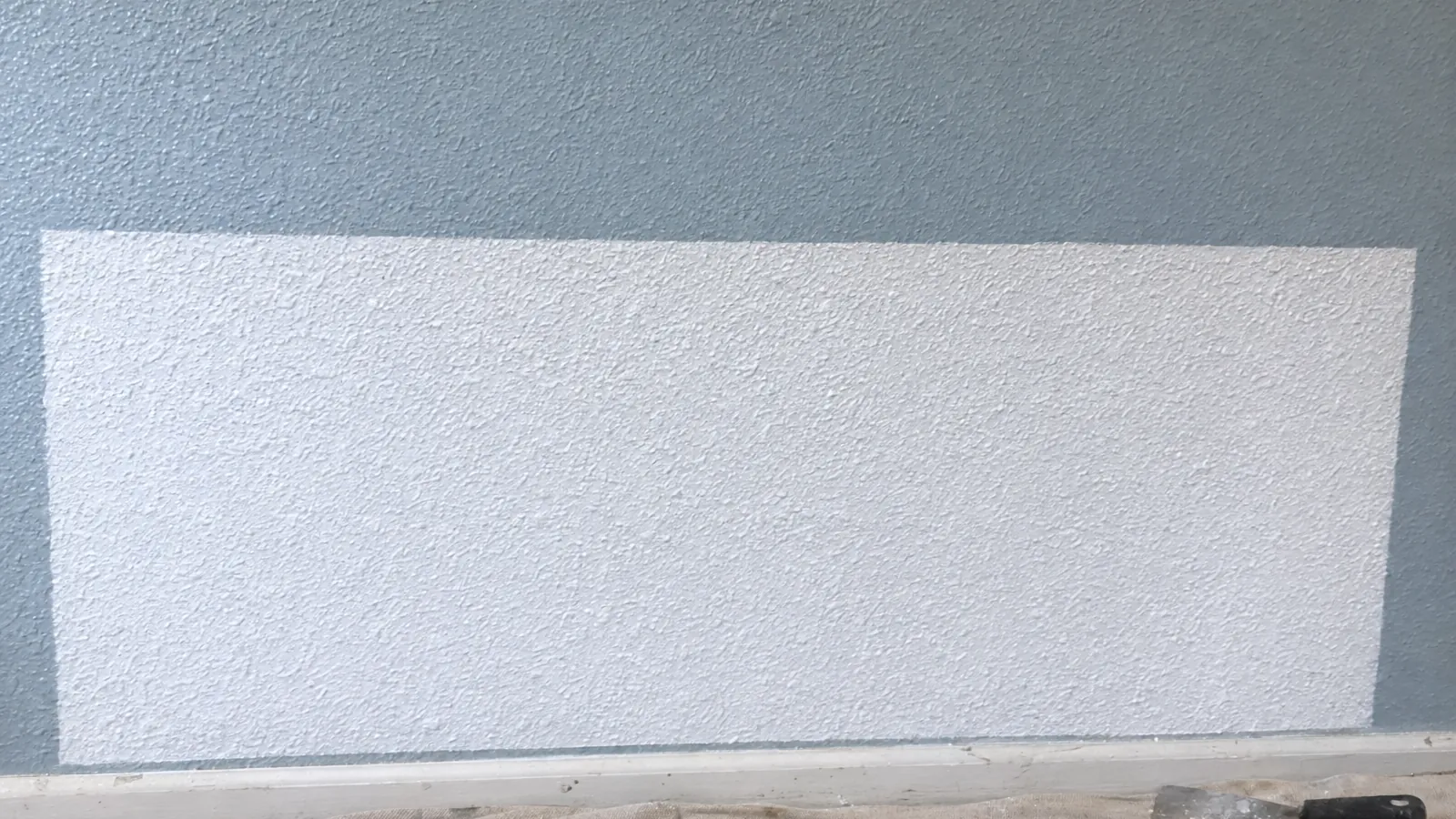
Drywall repair is mostly chemistry and patience. Joint compound is gypsum or vinyl binder carried in water, and as that water leaves, the compound shrinks; put the next coat on too soon and the shrinkage keeps going underneath it, which is how a smooth patch turns into a visible ridge a month later. So every job, small or large, follows one order of layers, and each layer waits on the one beneath.
Phone, or text a photo, and say what you can see: crack, ring, hole or sag, and if any of it still feels cool or damp to the touch. From that we work out the follow-up questions that move the price, like wall versus ceiling and the rough dimensions.
A pro who does drywall around the South Shore talks the job over with you by phone and names a figure. Not one screw comes out until you say yes.
Where water played a part, a pin meter goes into the gypsum. Soft or damp material is removed, since compound laid over wet gypsum never grips and later blisters.
New board or a patch goes in, then tape set in an embedding coat, a fill coat and a finish coat, each left to dry so its shrinkage happens before the next layer covers it.
Texture goes on to mirror the surrounding surface, then a coat of primer seals it. Paint can follow.
Skip a drying step and the patch shows. That is the whole reason for the sequence.
Each kind of damage has its own page on what causes it and how it gets put right.
Where a garage is attached, the wall and ceiling it shares with the house act as a fire separation rather than an ordinary partition. When a bedroom sits over the garage, that ceiling is normally Type X board, a gypsum panel with glass fibers in its core that keeps its shape longer in a fire. When a car door, a ladder or a bike handlebar punches into it, the right repair brings back the same kind of board and tapes every seam, so the separation stays continuous. A scrap of thinner board screwed over the hole looks fine and defeats the point.
Basements and cellars are a moisture question first. Gypsum pulls water up through its core like a lamp wick, so a wall that stood in an inch of flood water can read wet a good twelve inches higher. On streets near the bay and its creeks, or after any storm that left water on the floor, the order is dry, measure, rebuild. Board going back into a basement is usually a moisture-resistant or fiberglass-faced type, stopped short of the concrete so it can't drink from the floor again. If the meter still reads high, the repair waits. A dehumidifier earns its keep here.
Bayport holds 3,349 homes in the latest five-year ACS release (2019–2023), and the 1950s produced 856 of the houses still standing, more than any other decade. Put that beside the 325 that went up in 1939 or before and the 132 from the 1940s, and 1,313 homes predate 1960. Detached one-unit houses make up 2,426 of the total, and renters occupy 744 of the 3,309 lived-in homes, which brings a steady run of move-out patching as well.
That mix matters at the wall. A prewar house is likely plaster on wood lath. A 1950s house may hold early gypsum board whose thickness and paper differ from a sheet bought today, so the edge of any opening gets measured before a patch is cut. Even a one-eighth step between old and new takes extra coats to hide.
Bayport borders the Great South Bay, and Homan's Creek and Brown's River both run south to it. Nor'easters come through most often between November and March and can push severe coastal flooding onto low ground, so walls near the water are the likeliest to carry a tide line on the lower board and a musty smell behind the baseboard.
Middle Road, County Route 65, crosses Brown's River on its way through the hamlet, and when the Bayport Hose Company formed in 1891 it bought its first plot on the north side of this road. For a house on an old route like this one, find out whether the walls are plaster or board before anyone prices the work, because the two are repaired differently.
The fire department's newer house went up at Snedecor Avenue and Railroad Street in 1956, right in the decade that left Bayport the most homes still standing. Walls from that era can be early drywall with corner bead that has rusted or cracked loose, and nail pops along the studs where the framing shrank.
Fixr's national pricing page, updated January 2025, lists about $200 to $550 for a typical drywall repair, $60 to $200 for a single hole, $60 to $330 for crack repair and $400 to $800 for water-damage work, with most contractors billing $70 to $80 an hour. Treat those as national benchmarks rather than Bayport prices; your actual figure is set by whoever quotes your job. What moves a repair toward one end of a range or the other:
Sanded gypsum is so fine that it floats from room to room on ordinary air currents, which makes containment as important as the patch. A careful job begins with furniture shifted or covered, drop sheets or rosin paper on the floor, and plastic taped over the doorway to hold the dust in one room. Supply and return vents near the work are covered too, because a running furnace or air conditioner will happily spread sanding dust into every other room.
The sanding itself can be kept down. Setting-type compound, carefully troweled, needs less of it; what remains can be knocked down with a wet sanding block or pulled into a vacuum shroud at the sander head. Whoever quotes the job can tell you how they handle dust in your room; for a ceiling above a finished hardwood floor, bring it up while scheduling.
Three approaches cover most damage. The choice depends less on the look of the hole than on what happened to the board around it.
| Small patch | New board section | Skim coat | |
|---|---|---|---|
| Suits | Doorknob holes, nail pops, screw anchors | Wet, crumbled or large damage | Walls full of fine cracks or torn paper |
| Moisture in the board | Not suitable | The usual answer | Not suitable |
| Coats of compound | Two or three | Three plus texture | Two or three over the whole wall |
| Dust | Light | Heaviest | Moderate, spread over a larger area |
| Texture blending | Feathered into the wall | Sprayed or troweled to blend | Whole surface becomes the new texture |
| Relative cost | Lowest | Highest | In between |
Bayport lies in the southeast part of the Town of Islip, and requests from the hamlets around it are welcome. Blue Point lies just to the east and shares its school district and library with Bayport. Sayville and West Sayville run west along the same shoreline. Bohemia lies to the northwest and Holbrook to the north-northwest, while the village of Patchogue sits east-northeast on Patchogue Bay.
Plaster on wood lath is a three-layer system: a scratch coat pushed through gaps in the lath so it curls behind and forms keys, a brown coat to level it, and a thin finish coat. Cracks start when those keys snap, usually from settling, from the framing shrinking as it dries, or from decades of door slams near the frame. Filling the crack alone fails because the plaster on either side still moves. The fix is to screw the loose plaster tight to the lath through plaster washers, bridge the crack with mesh and setting compound, and skim over it.
Old paint is the second caution. The EPA's lead-safe renovation rule covers paid work that disrupts painted surfaces in housing from before 1978, and 2,450 of Bayport's homes were standing before 1980. Before anyone sands an old wall, find out how lead-based paint will be checked for and how its dust would be contained.
A good match starts with knowing what is on the wall. Standard half-inch gypsum board covers most rooms built after the war; five-eighths Type X shows up in garages and some ceilings; bathrooms and basements get moisture-resistant panels. Compound comes in two families. Setting-type, often called hot mud, hardens as its gypsum recrystallizes and shrinks very little, which is why it is used for the first fill. Ready-mixed compound loses its water to the air and sands easier, which makes it better for the final coat.
Texture is what the eye catches first. Smooth walls need a feathered finish wide enough that light raking across the wall finds no edge. Orange peel is a light spray of droplets from a hopper gun. Knockdown is a heavier spatter flattened with a trowel once it begins to firm up. Ceiling texture in older homes may be a sprayed acoustic finish, and a sample of it belongs at an asbestos lab before scraping. The guide to board, compound and tape goes through each material in detail.
Snap the crack, ring or hole on your phone and send it over, or ring and describe it. A contractor close by names a figure, and only then is anything booked. How the business arranges each repair is laid out on the about page.
Whoever prices the job phones back to settle size, texture and timing first.